
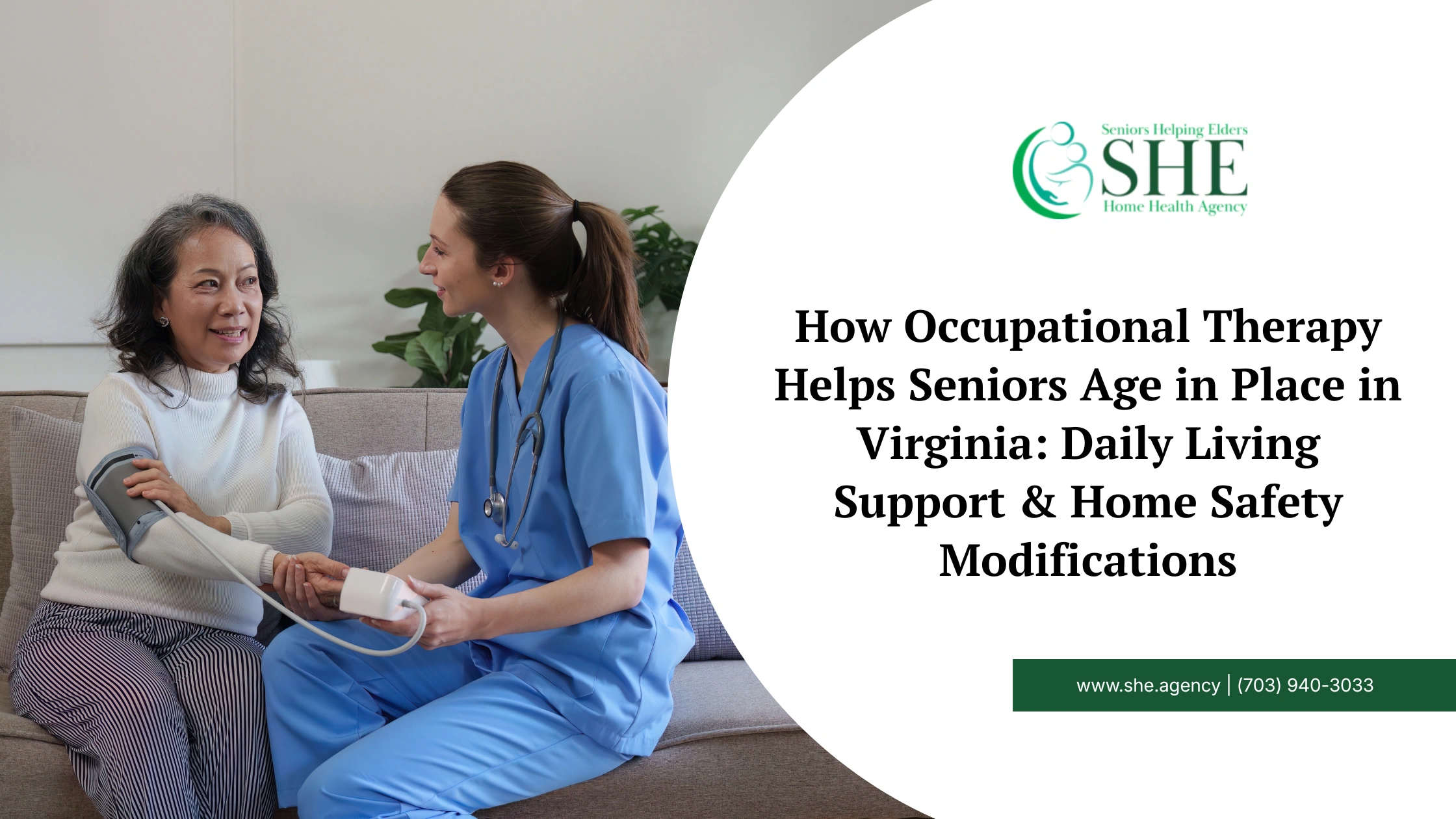
Aging in place requires more than comfort—it requires the ability to safely manage daily routines at home. Occupational therapy helps seniors across Virginia maintain independence by adapting both their environment and their daily activities. With structured support, aging at home becomes safer, more practical, and sustainable over time.
Supporting Daily Independence Through Occupational Therapy
As daily tasks become more challenging, maintaining independence requires structured support and adaptation. Occupational therapy focuses on helping seniors perform essential activities safely while preserving their autonomy. This approach directly supports aging in place by making everyday routines more manageable.
- Personalized activity planning: Tailors daily routines based on physical ability and health conditions
- Functional task training: Focuses on essential activities such as dressing, bathing, and meal preparation
- Adaptive techniques: Introduces safer methods to complete tasks without strain or risk
Why Aging in Place Requires Structured Support
Remaining at home offers emotional comfort, but safety and functionality must be maintained. Without proper support, daily tasks can become risky and lead to injuries or dependence. Structured care ensures that aging in place remains both safe and sustainable.
- Environmental familiarity: Reduces confusion and supports mental well-being
- Routine stability: Maintains consistent daily habits
- Reduced institutional reliance: Allows seniors to remain in a home setting
Common Barriers to Safe Living at Home
Aging at home presents several challenges that can impact safety and independence. These barriers often develop gradually and may go unnoticed until they lead to complications. Identifying them early allows for targeted intervention.
- Reduced mobility: Limits the ability to move safely within the home
- Coordination decline: Increases risk during daily activities
- Cognitive changes: Affects memory and task execution
- Environmental risks: Clutter, poor lighting, and unsafe layouts
How Occupational Therapy Improves Daily Living Function
Occupational therapy focuses on improving the ability to perform essential daily tasks. By adapting activities and strengthening functional skills, seniors can maintain independence while reducing risk. This creates a direct connection between therapy and safe living at home.
- Task simplification: Breaks complex activities into manageable steps
- Energy conservation techniques: Reduce fatigue during daily routines
- Motor skill development: Improves coordination and precision
- Routine adaptation: Aligns activities with current physical ability
Structured care, such as occupational therapy services in Virginia ensures consistent progress.
Home Modifications That Improve Safety and Accessibility
The home environment plays a critical role in fall prevention and daily function. Small modifications can significantly reduce risk and improve accessibility. These changes support both mobility and independence.
- Bathroom safety adjustments: Installation of grab bars and non-slip surfaces
- Improved lighting systems: Enhance visibility and reduce accidents
- Furniture arrangement: Creates clear pathways for safe movement
- Assistive equipment: Supports safe transitions and mobility
How Occupational Therapists Evaluate Home Environments
Assessing the home environment allows therapists to identify specific risks and recommend practical changes. This process ensures that care plans are realistic and directly applicable to daily life.
- Movement observation: Evaluates how seniors navigate their home
- Hazard identification: Detects areas that increase fall risk
- Accessibility review: Ensures key areas are easy to use
- Customized recommendations: Provides targeted solutions based on lifestyle
Daily Activities Supported Through Occupational Therapy
Maintaining independence requires the ability to perform essential daily tasks safely. Occupational therapy focuses on improving these activities through structured interventions.
- Personal care routines: Supports bathing, dressing, and grooming safely
- Meal preparation tasks: Improves ability to cook and handle kitchen activities
- Medication management: Encourages consistency and safety
- Household tasks: Simplifies chores to reduce strain
Integrating Occupational Therapy With Other Care Services
A comprehensive care plan often includes multiple services working together. Occupational therapy complements other forms of care to improve overall outcomes and safety.
- Mobility support: Physical therapy services improve strength and movement
- Clinical oversight: Skilled nursing services manage medical needs
- Daily assistance: Home health aide services support routine activities
Understanding Cost and Coverage for Occupational Therapy in Virginia
Planning care requires an understanding of financial considerations. Therapy services may be covered depending on medical necessity and insurance eligibility.
- Insurance coverage: Many plans support therapy when medically required
- Service frequency: Number of sessions impacts total cost
- Care complexity: Advanced conditions may require specialized support
SHE helps guide families through these considerations.
Mistakes That Can Limit Independence at Home
Certain habits can reduce the effectiveness of therapy and increase risks. Addressing these early improves outcomes and supports long-term independence.
- Delayed support: Waiting too long to seek help increases risk
- Inconsistent therapy use: Slows progress and limits results
- Unsafe environments: Increase fall and injury risks
- Overdependence: Limits independence development
Environmental Factors Affecting Aging in Place in Virginia
Living conditions influence how safely seniors can remain at home. Understanding these factors helps improve planning and care delivery.
- Home structure limitations: May require modifications for accessibility
- Surface conditions: Flooring and layout impact movement safety
- Access to services: Availability of in-home care supports consistency
SHE provides care aligned with these real-world needs.
Long-Term Strategies for Aging in Place Successfully
Sustained independence requires consistent support and ongoing adjustments. Long-term strategies help maintain safety, comfort, and functionality.
- Routine therapy sessions: Maintain functional ability
- Periodic reassessment: Adjust care plans as needs change
- Integrated support systems: Combine therapy with daily assistance
- Lifestyle adaptation: Align routines with physical capability
Accessing Occupational Therapy Services Across Virginia
Access to professional care ensures seniors receive structured and effective support. SHE provides services designed to improve independence and safety at home.
- Daily living support: Occupational therapy services in Virginia improve independence
- Mobility services: Physical therapy enhances strength
- In-home support: Home health aide services assist with routines
Explore Virginia service areas and connect via the SHE Facebook page.
Frequently Asked Questions
Understanding aging in place often involves addressing practical concerns. These answers help guide informed decisions.
How does occupational therapy support aging in place?
Occupational therapy improves the ability to perform daily tasks safely. It focuses on adapting routines and environments. Learn more about occupational therapy services in Virginia.
What home modifications are most important?
Key changes include grab bars, improved lighting, and removal of hazards. These improve safety and reduce risks.
Can occupational therapy be combined with other care?
Yes, it works alongside therapy and in-home care services to improve outcomes. Combined care enhances safety and independence.
Is occupational therapy covered by insurance?
Many plans cover therapy when medically necessary. Coverage varies based on provider and condition.
Get Professional Aging-in-Place Support With SHE
If daily activities are becoming more difficult, early intervention can help maintain independence. Occupational therapy provides structured solutions that improve safety and function at home.
SHE provides home health care services across Virginia with a focus on clinical quality, safety, and compassionate support. Care plans are designed to align with each individual’s needs and daily routines.
📍 Address: 46191 Westlake Dr #208, Sterling, VA 20165
📞 Call: (703) 740-8810 to discuss care options
📧 Email: info@she.agency
🌐 Explore occupational therapy services to get started